In 2002, Greg Glassman published a prescription for world-class fitness in exactly one hundred words.
“Eat meat and vegetables, nuts and seeds, some fruit, little starch and no sugar. Keep intake to levels that will support exercise but not body fat. Practice and train major lifts: Deadlift, clean, squat, presses, C&J, and snatch. Similarly, master the basics of gymnastics: pull-ups, dips, rope climb, push-ups, sit-ups, presses to handstand, pirouettes, flips, splits, and holds. Bike, run, swim, row, etc, hard and fast. Five or six days per week mix these elements in as many combinations and patterns as creativity will allow. Routine is the enemy. Keep workouts short and intense. Regularly learn and play new sports.”
Greg Glassman — “World-Class Fitness in 100 Words,” CrossFit Journal, 2002
I have spent most of my coaching life inside those hundred words. I taught them at seminars for eighteen years, and I watched them work in the gym for longer than that.
What made them work was not just what they said. It was the form. Short enough to remember. Specific enough to act on tomorrow morning. Concrete enough to be tested — and to be proven wrong. Most of what gets written about health cannot be proven wrong, and that is exactly why it changes nothing.
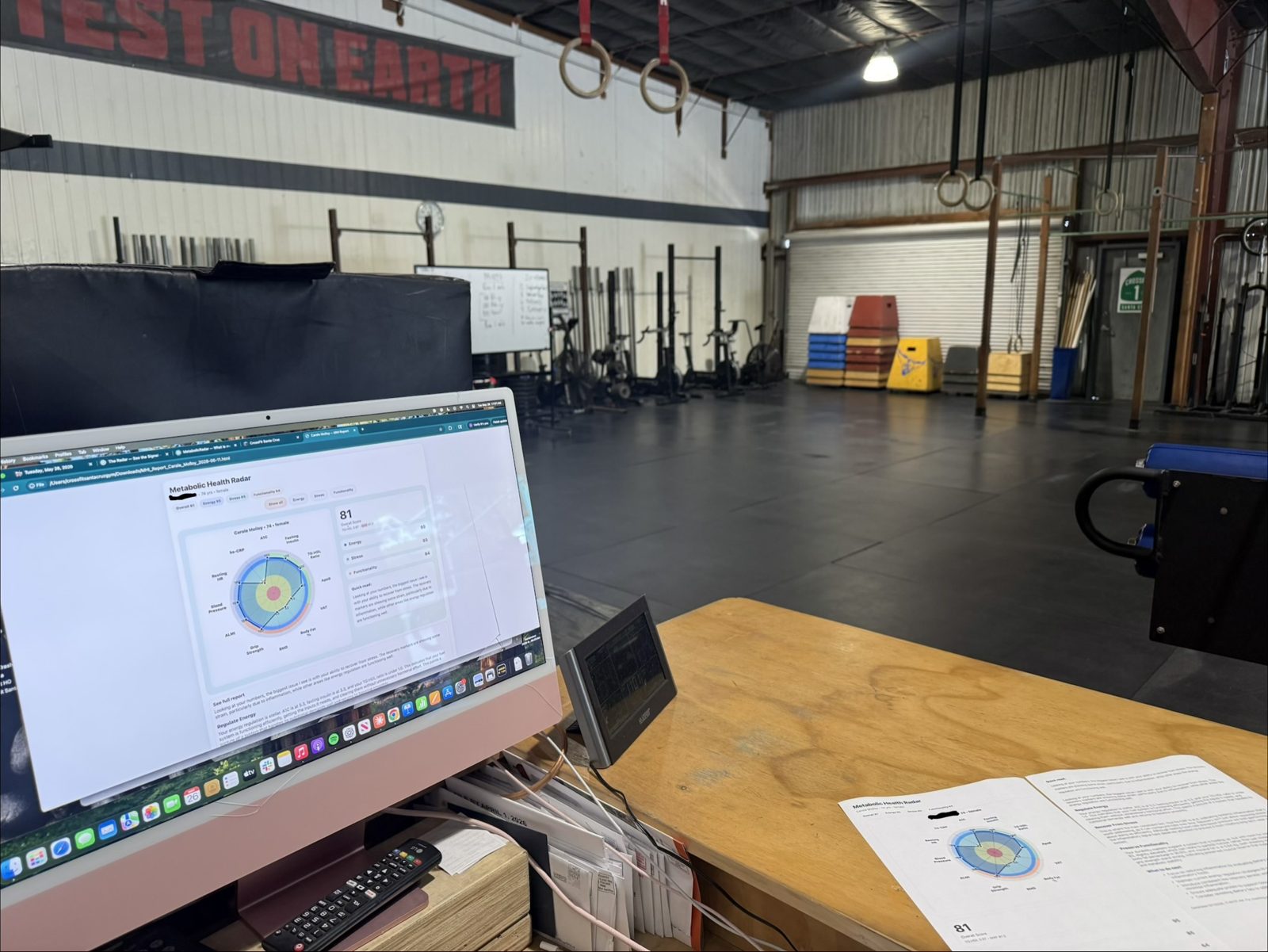
The question I am working on now — what is metabolic health, and who has it? — deserves the same discipline. Not another article. A prescription short enough for a coach to hand to an athlete, and concrete enough for the athlete to test against their own bloodwork.
So I followed the form the master gave us, as a student trying to push the mission forward.
Metabolic Health in 100 Words
Eat protein and fat. Use carbohydrate to support work capacity, but not unnecessary glycation. Avoid added sugar and industrial seed oils, use periodic fasting to support AMPK signaling and autophagy, drink water to thirst.
Practice functional movements. Exercise at high intensity to train phosphagen and glycolytic pathways to create adaptation. Use bodyweight movements and external loads to preserve bone, muscle, and load bearing tissue. Perform cyclic work to drive GLUT-4 mediated uptake. Favor short efforts, use longer efforts deliberately. Rest to recover between exposures.
Regularly measure insulin, A1C, lipids, hs-CRP, blood pressure, and body composition.
Adjust inputs until physiology improves.
Greg’s hundred words end with play. Mine end with measurement, because measurement is how this version gets tested. This is one attempt, and I expect the Radar to push back on it. When it does, I will revise it.
Hollis